

Dunwoody Seller Playbook: 9 Prep Moves That Protect Your Sale Price
Before the first showing is booked and before a single photo is taken, smart preparation sets the tone for everything that follows. In Dunwoody, buyers move quickly—but they also compare carefully, weighing condition, layout, and "hidden" maintenance details that don't show up in a listing description. The good news is that protecting your sale price isn't about endless renovations. It's about targeted, confidence-building moves that make your home feel cared for, easy to own, and worth stretching for.
Below is a practical playbook of nine prep steps that consistently help sellers reduce objections, strengthen offers, and limit inspection negotiations. Think of it as positioning: you're not just selling a house—you're presenting a lifestyle and a legacy-ready asset.

1) Start with a pre-listing inspection (and keep control of the story)
A pre-listing inspection isn't mandatory, but it can be a powerful way to protect your leverage. When you know what a buyer's inspector is likely to find—aging HVAC components, a tired water heater, minor electrical issues—you can decide what to repair, what to disclose, and what to price for strategically. This reduces the chance of a contract falling apart late in the process or a buyer using surprises to demand large credits.
Seller advantage: you get to address concerns on your timeline, with your preferred vendors, rather than under deadline pressure during due diligence.
2) Fix "small" defects that create big doubt
Loose doorknobs, stuck windows, slow drains, missing switch plates, wobbly railings—none of these are expensive, but together they signal deferred maintenance. Buyers often use these little clues to assume bigger issues exist behind the walls. Knock out a punch list before you ever go live, and you'll reduce the mental friction that makes buyers hesitate.
3) Invest in curb appeal where it's visible in the first 10 seconds
In Dunwoody, first impressions matter because many buyers are juggling busy commutes and packed weekends—they decide quickly whether a home "feels right." Focus on what reads instantly: fresh mulch, edged beds, trimmed shrubs, pressure-washed walkways, clean gutters, and a front door that looks inviting. If your exterior paint is fine, don't repaint the whole home—just refresh the front door, replace dated hardware, and make lighting warm and functional.
Tip: if you're unsure where to spend, take a photo from the street and circle everything that looks tired. That's your priority list.
4) Declutter like you're moving (because you are)
Decluttering is not about "hiding stuff." It's about restoring scale and making rooms feel purposeful. Half-empty closets read as generous storage; clear counters read as clean and calm; simplified bookshelves read as spacious. In practical terms, buyers need to imagine their own life in the home—school mornings, holiday dinners, quiet evenings—and that visualization is harder when every surface is competing for attention.
What to pack first: oversized furniture, extra chairs, personal photos, awards, collections, and anything stored on the floor. A small storage unit for 30–60 days can be one of the highest-ROI seller expenses.
5) Refresh paint strategically (choose calm, light, consistent tones)
Fresh paint is one of the simplest ways to reset a home's mood, but the key is restraint. A consistent palette helps the home show as cohesive—especially in open layouts where rooms connect visually. Aim for soft neutrals that work with both warm and cool furnishings. Save bold color for a future buyer's accent wall; your job is to create a clean canvas that photographs well and feels bright in person.
If full repainting isn't needed, focus on touch-up "hot zones": baseboards, door trim, scuffed hallways, and any wall behind frequently used seating.
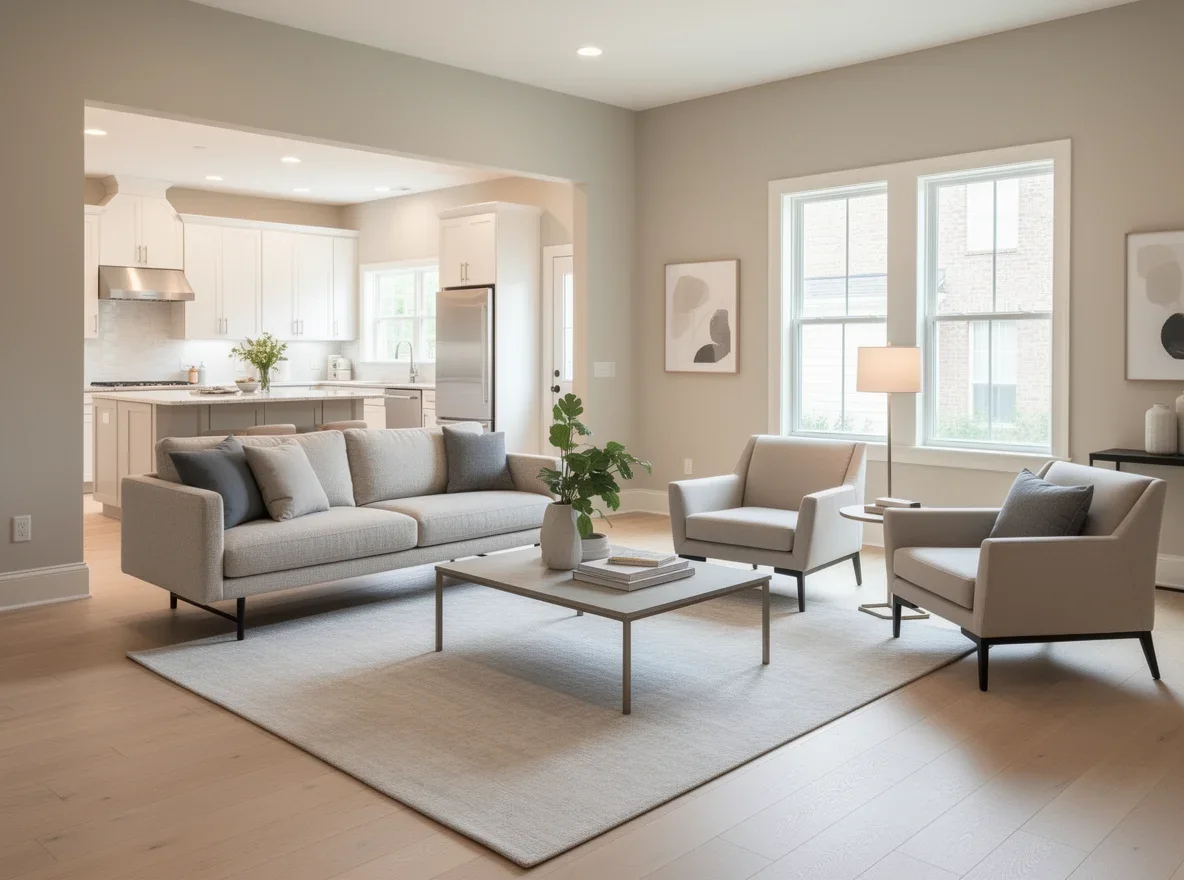
6) Stage for flow, not for furniture
Great staging isn't about making a home look expensive—it's about making it easy to understand. Buyers should instantly see how a dining area functions, where a desk can go, and whether the living room layout accommodates their lifestyle. In Dunwoody's competitive segments, staging often helps buyers emotionally "land" in the space, which supports stronger offers and fewer nitpicks.
High-impact staging moves: remove one oversized piece per room, anchor seating with a properly sized rug, add layered lighting (table + floor + overhead), and keep bedroom surfaces minimal. Bathrooms should feel spa-clean: crisp towels, clear counters, and bright mirrors.
If you're living in the home during showings, create a simple reset routine: clear kitchen counters, hide pet items, open blinds, turn on lamps, and run a quick vacuum pass. Consistency is what keeps momentum high during the first week on market.
7) Make the kitchen and baths feel "updated" without major renovation
Full remodels can be risky if you're not certain you'll recoup the cost. Instead, prioritize improvements that read as modern: updated cabinet hardware, a new faucet, fresh caulk, bright LED lighting, and clean grout lines. If appliances are mismatched or visibly aging, replacing one or two key pieces (like a range or dishwasher) can improve the whole room's perception.
In bathrooms, replace tired vanity lights, swap an old showerhead, and ensure the fan and plumbing fixtures work flawlessly. Buyers pay attention to moisture and ventilation—even when they can't articulate why.
8) Get serious about systems: HVAC, roof, drainage, and attic signals
Many price reductions and repair credits come from fear, not facts. When a buyer sees an old HVAC unit, staining near gutters, or a musty attic smell, they imagine worst-case costs. Your goal is to replace uncertainty with documentation. Service the HVAC, change filters, clear the condensate line, and keep records. Ensure downspouts direct water away from the foundation. Replace missing insulation in obvious spots and confirm attic access is clear and safe.
Proof beats promises: receipts, transferable warranties, and service reports can reduce back-and-forth negotiations during due diligence.
9) Price and launch like a strategy—not a guess
Preparation protects value, but the launch plan protects momentum. The first days on market are when interest peaks, showing volume is highest, and buyers are most willing to compete. That's why the pricing strategy, photo readiness, and showing availability should align. Clean lines, bright rooms, and a home that "shows honest" can justify confident pricing—especially when you've reduced the obvious inspection leverage a buyer might use.
Also consider the emotional side: a well-prepared home signals pride of ownership. That attracts buyers who respect the property and are less likely to treat negotiations as a game.

What makes Dunwoody buyers say "yes"
Beyond the home itself, Dunwoody appeals to buyers who want everyday convenience paired with a comfortable, established feel—tree-lined streets, proximity to major corridors, and easy access to parks and community amenities. Many buyers are looking for a place that supports their routine: morning workouts, quick errands, dinner plans, and a weekend reset without a long drive. When your home is prepped to feel low-maintenance and move-in ready, it aligns perfectly with what these buyers value most: time, ease, and confidence.
And for sellers who care about more than the transaction, preparation is also stewardship. Presenting your home well helps protect your equity—an important piece of building long-term stability and generational wealth. That mission-driven mindset is central to how Real Estate Professional approaches every listing: luxury-level presentation, lifestyle-forward positioning, and guidance that empowers you to make clear, strategic decisions.
Closing thought
If you're considering selling in Dunwoody, the best first step is not guessing which upgrades to do—it's creating a prioritized plan that matches your timeline, budget, and neighborhood expectations. Prep doesn't have to be overwhelming; with the right sequence, it becomes a calm, methodical process that helps you defend your price and attract the kind of buyer who recognizes value. When you're ready, Dyan Edwards can help you build that plan and launch with purpose.